Cart
0
Warfighting strategy to change after US loses war games to China
The U.S. military plans to change its warfighting strategy after getting its “ass handed to it” by China in war games conducted last fall.
In 2018, the National Defense Strategy Commission (PDF) found mounting concerns about the U.S. military’s ability to handle China in a war over Taiwan.
To avoid a potential failure, the Department of Defense (DoD) has announced it is reorienting the way it wages war.
Gear Spotlight- What Our Readers Are Picking Up



“Expanded maneuver” is what the DoD has termed their new strategy.
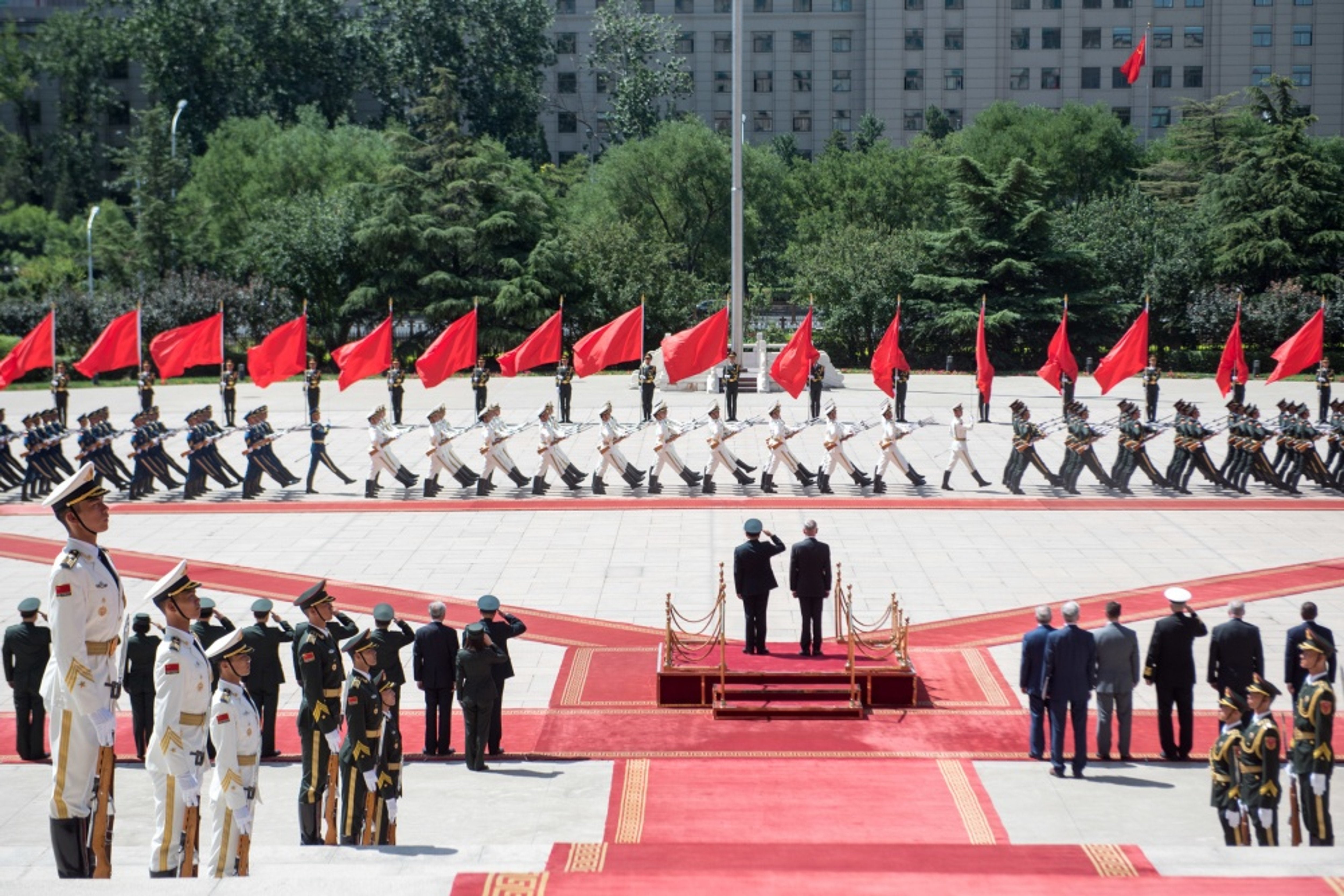
U.S. Secretary of Defense James N. Mattis meets with China’s Minister of Defense Gen. Wei Fenghe at the People’s Liberation Army’s Bayi Building in Beijing, China, on June 28, 2018. (DoD photo by Army Sgt. Amber I. Smith)
The value of war games
Last week, Air Force Gen. John E. Hyten spoke on the new strategy at the National Defense Industrial Association’s Emerging Technologies Institute.
Gen. Hyten said, “Expanded maneuver involves understanding how adversaries can operate in all domains and how to stop them while protecting DOD and coalition forces.”
This shift comes after multiple reports pertaining to failed war games conducted during the fall of 2020. In the simulations, China won every time.
Following his acknowledgement of the need for change, Hyten said, “In today’s world, with hypersonic missiles, with significant long-range fires coming at us from all domains, if you’re aggregated and everybody knows where you are, you’re vulnerable.”
Expeditionary warfare, or, warfighting with aggregated units positioned away from bases, has been determined as the main cause for failure.
The US has long upheld this strategy in previous wars, but in theaters where China reigns, the plan appears to be faulty.

An example of a life-like miniature model of a war zone to help wargamers have the best training available. (Photo by Chavonne Ford, contractor in support of FD/MCWL Wargaming)
Four major changes
There are four areas being altered by the expanded maneuver strategy. These are: contested logistics, joint fires, joint all-domain command and control, and information advantage.
Logistics in a contested environment is never an easy task, especially when it is contested by a near peer rival like China.
“Contested logistics has been an area of rich study, rich conversation, and we’re changing our entire logistics approach because of it.” Hyten commented.
When it comes to joint fires, the goal is to leave the enemy befuddled. This is done by opening up the range of choices for where to fire from and who can fire.
By opening up all attack options, an adversary is left with no ability to predict the order by which that would happen.
For command and control, the DoD is looking to its new cloud initiative. The cloud service is called the Joint Warfighting Cloud Capability (JWCC).
The JWCC initiative seeks to unify information for the sake of making warfighting decisions faster than ever.
Similar to command and control, the fourth shift is in information advantage. This change seeks to enable interoperability across the joint force and with allies and partners.
The new cloud will not only allow for faster decisions on behalf of the U.S. It will also give allies that capability.
However the new configuration may play out, it is more important than ever to acknowledge and learn from the weaknesses of prior strategies.
Also Read: Hacking Back: Cyber Command lawyer pushes for speedier military responses